This Thursday, October 1, the sprinklers across Bonnie Brae and Belcaro go quiet for the season, and this time they are not coming back on in the spring without a separate vote from the Denver Board of Water Commissioners. Most of what the ban actually shuts off is grass, and grass in this neighborhood was headed toward dormancy anyway with the first frost usually landing in early October. The lawns will brown up a few weeks early and green back up in April, same as always.
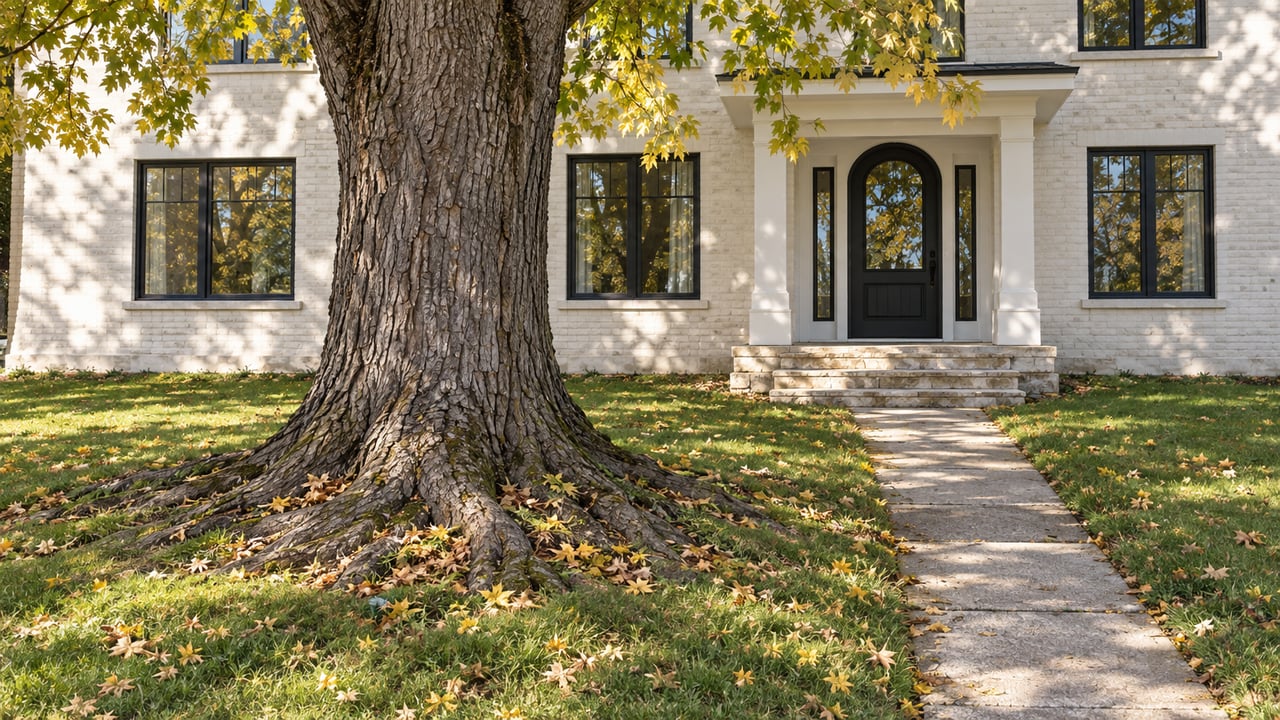
The trees are a different story, and Bonnie Brae's trees are a different story than most Denver neighborhoods' trees. The silver maples that shade the winding streets around the elliptical Bonnie Brae Park were mostly planted during the neighborhood's original build-out in the 1920s through the 1940s, which puts them squarely in the age range a local tree service recently flagged as already at or past peak age and unusually exposed to drought stress, right alongside Congress Park, Washington Park, and University Park. Those trees have spent eighty to a hundred years getting watered the same way twice a week, every summer, from lawn sprinklers set to run a few inches deep. That habit built shallow root systems, because a tree only grows roots as deep as it needs to reach water, and for most of a century the water always showed up near the surface. Starting Thursday, that specific source disappears for good.
What Actually Turns Off October 1
The mechanics matter more than the headline. On August 26, 2026, the water board amended its Stage 1 drought declaration to prohibit lawn watering and all spray irrigation as of October 1, on top of the twice-weekly restrictions that have been in place since the board first declared Stage 1 drought in March. Watering establishment permits, the paperwork needed to legally water in new sod or seed, stop being issued after September 30, so reseeding a patchy fall lawn without a variance won't be an option once October arrives.
Trees, shrubs, perennials, and vegetable gardens are carved out of the ban entirely. Hand watering with a hose that has a shut-off nozzle, and drip or other low-volume irrigation, remain legal every day of the week, no time-of-day restriction, for as long as the drought order stays in effect. The rule is not that Bonnie Brae's canopy goes without water this winter. The rule is that it can no longer get that water automatically, from the same zone as the lawn, on the same twice-a-week schedule the neighborhood has run on for decades.
Decades of a Habit, Reversed Overnight
That last distinction is the one worth sitting with. A tree that has always been watered by an in-ground sprinkler shares its irrigation zone with the grass around it, on the same valve, same schedule, same shallow soak. Cut the lawn's water and, unless someone manually reprograms or re-plumbs that zone, the tree loses its water too, even though the rule never intended to touch it. Denver's own tree care guidance recommends deep, slow watering within the drip line and critical root zone, since most of a mature tree's absorbing roots sit in the top twelve inches of soil, spread out two to four times as wide as the tree is tall. A shallow-rooted eighty-year-old silver maple that has never needed to send roots deeper because the sprinkler always refilled the top layer is exactly the tree this changeover puts at risk.
Denver Water's CEO, Alan Salazar, put the broader stakes plainly when the board announced the amendment: "It's critical that our customers turn sprinklers off Oct. 1, so that we can extend our water supply." The framing from the water utility's side is about extending storage. From a homeowner's side under one of these trees, the framing is about whether the canopy that has shaded a Bonnie Brae porch for three generations makes it through a Colorado winter with no snow cover and a system that no longer refills automatically.
The Numbers Behind the Order
Denver Water didn't reach for an outright ban lightly. Natural streamflow into the utility's storage reservoirs between April and July of 2026 came in at roughly 95,000 acre-feet, which is 22% of normal and the lowest level recorded in 110 years of Denver Water's recordkeeping. As of September 21, 2026, reservoir storage sat at 68% full, against a historic average closer to 91% full for that point in the calendar. Layer on a stretch through July that ranks as the hottest on record for the metro area, with average daily highs running five degrees above normal and precipitation about four inches below normal, and the picture is less a dry summer than a supply system running well below what it's built to handle heading into winter.
That context explains why the board moved from a Stage 1 order in March, which limited watering to two assigned days a week and asked for a 20% cut in water use, to a hard stop on lawn irrigation by late August. It also explains why the order has no fixed end date. Sprinklers stay off through the winter and into spring 2027 until the board issues a separate resolution allowing them back on, which means this isn't a six-month inconvenience with a known return date. It's an open-ended condition that depends on how much snow falls in the mountains this winter.
What Still Works for an Old Canopy
The exemptions carved out for trees are specific enough to act on this fall.
- Hand watering with a shut-off nozzle, and drip irrigation, remain legal daily, with no restriction on day or time.
- For established trees, Denver Water's guidance calls for deep watering once or twice a month from October through April, using roughly 10 gallons per inch of trunk diameter, applied only when the ground isn't frozen and midday temperatures are above 40 degrees.
- Water should reach 12 inches deep across the drip line and the wider root zone, not just at the base of the trunk, since that's where the absorbing roots actually sit.
- Mulch inside the drip line, three to four inches deep, with a six-inch gap from the trunk, helps hold moisture through the dry months.
- If the irrigation system currently runs a tree and the surrounding lawn off the same zone, which is common in homes built during Bonnie Brae's original development, that zone needs to be separated or reprogrammed before the controller gets shut down for the season, or the tree loses water it's legally still entitled to.
None of this requires new equipment for most yards. A hose with a shut-off nozzle and a monthly reminder covers the letter of the exemption. What it requires is treating the tree as a separate watering job from the lawn, which is not how most systems in this neighborhood were built to operate.
The Park Gets a Different Rule Than the Yard Around It
Denver's amendment leaves room for limited exceptions on high-traffic public turf, specifically naming parks, athletic fields, and school grounds as categories that can apply for approved watering beyond what a private lawn is allowed. Whether Bonnie Brae Park's own turf secures that kind of approval this fall is a separate process from the ban itself, but the carve-out exists for that category of ground in a way it simply doesn't for a front lawn on Tennessee or Kentucky Street. It's possible the elliptical park at the center of the neighborhood ends up greener in November than the private yards surrounding it, not because anyone broke a rule, but because public turf and residential turf were never treated the same way in the order to begin with.
For anyone under the Belcaro Park HOA's landscaping standards, Colorado's Common Interest Ownership Act is worth knowing about too. State law prevents an association from taking enforcement action requiring a homeowner to water in violation of a government-declared restriction, which means a lawn gone dormant under Denver's own mandatory order isn't grounds for a covenant violation.
Trees are the actual test this fall in Bonnie Brae, not lawns. The canopy that makes this stretch of Denver look the way it does spent decades getting watered a certain way because it never had to be watered any other way. That option is gone as of October 1. What's left is a legal, workable substitute that depends entirely on someone remembering to use it.
If you're weighing what a mature lot with an established canopy is actually worth in this market, or want a read on how Bonnie Brae's landscaping stacks up against similar homes nearby, Shelby Richardson can walk you through it, tree by tree.
This article is general information, not legal, tax or financial advice. Consult a qualified professional about your situation.