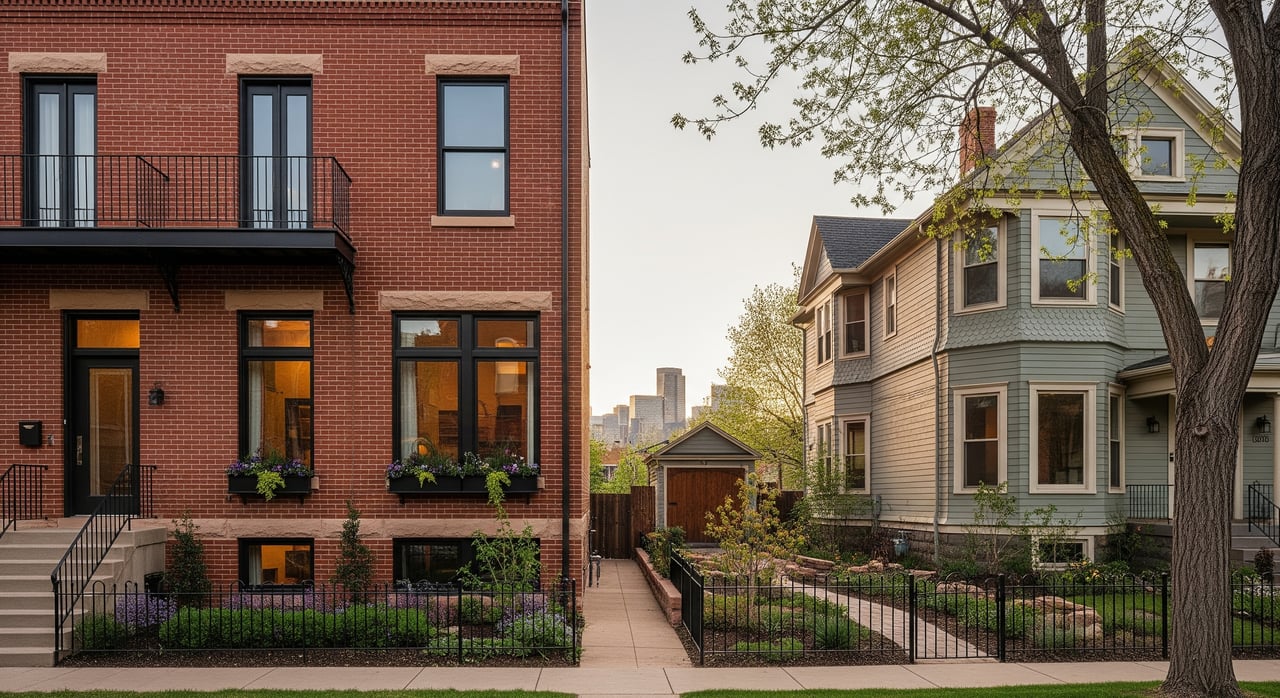
Thinking about life in Denver’s Highlands or LoHi and torn between a sleek rowhome and a classic single-family house? You are not alone. With walkable streets, top dining, and quick access to downtown, both options can be a great fit. In this guide, you will learn how ownership, HOA rules, noise, outdoor space, parking, financing, and resale differ so you can match your home to your lifestyle and budget. Let’s dive in.
Highlands and LoHi snapshot
Highlands and LoHi sit just northwest of downtown, offering short commutes, strong restaurant and retail clusters, and easy access to parks and Sloan’s Lake. The area is very walkable and bike friendly, which is a major draw if you want an urban lifestyle. Housing is mixed: historic Victorians and bungalows sit alongside newer infill single-family homes, duplexes, and stacked townhomes. Lot sizes tend to be smaller than many suburbs, and LoHi has more dense, newer rowhomes close to nightlife and transit.
What you actually own
Detached single-family
- Usually fee simple ownership. You own the land and the structure and handle all maintenance, inside and out.
- Full control over exterior choices and timelines, subject to zoning and permits.
- Insurance is typically a standard homeowners policy for the whole structure and your belongings.
Rowhome and townhome
- Can be fee simple with an HOA that manages shared elements, or a condominium regime where you own the interior and a share of common areas.
- Your maintenance obligations and insurance depend on the recorded ownership form and the HOA’s master policy. Many condo regimes require a walls-in policy for your interiors and personal property.
- Lenders and underwriting may view fee-simple townhomes differently than condos, which can affect financing options.
HOA rules to review
HOAs in Highlands and LoHi vary widely. Before you write an offer, request and read:
- Monthly or quarterly dues and what they include like exterior maintenance, roof, snow removal, trash, insurance, and reserves.
- Reserve fund and special assessments history.
- Rules on rentals and short-term rentals, pets, noise, and exterior changes.
- Parking rules and entitlements, including garage use and guest parking.
- Insurance certificate to confirm what the master policy covers versus your policy.
Lifestyle trade-offs
Noise and privacy
- Rowhomes share one or more party walls. Newer builds often have better soundproofing, but shared-wall noise is still possible.
- LoHi’s active corridors can be lively into the evening. Proximity to bars and restaurants may add street noise regardless of housing type.
- Detached homes usually offer better lateral privacy and fewer shared-wall issues, though narrow-lot infill homes can still feel close to neighbors.
Maintenance and control
- Detached: You control and pay for all exterior work, from roof to landscaping. More work, more freedom.
- Rowhome/HOA: Many exterior tasks may be covered by dues. Less hands-on effort, but you follow the association’s schedule and standards.
Outdoor space
- Single-family homes are more likely to offer a private backyard. Sizes vary, but you will usually have more room for gardening, pets, or play.
- Rowhomes often include compact yards, courtyards, rooftop decks, or shared greens. Rooftops deliver outdoor living with minimal yard work.
Parking and access
- Many properties rely on alley garages. Check whether the home includes a private garage or assigned spot.
- On-street parking can have time limits or permit zones on some blocks near commercial areas. Know the rules for your block and your guests.
Stairs and layouts
- Newer rowhomes are commonly multi-level with stacked living spaces and rooftop decks. Consider daily stair use and accessibility needs.
- Detached homes may offer more single-level options, though many historic homes are also multi-story.
Cost and financing factors
Pricing patterns
- Proximity to downtown and strong walkability support demand in Highlands and LoHi. Location often drives value as much as the building type.
- Townhomes typically carry a lower total price than larger detached homes, though price per square foot can be higher for newer, well-finished units.
- Detached homes with yards on quieter streets often draw a wider buyer pool, while rowhomes appeal to buyers prioritizing low maintenance and location.
Monthly costs and insurance
- HOA dues are ongoing. Compare dues to the cost of self-managing a detached home’s exterior upkeep, snow removal, and landscaping.
- In condo regimes, the HOA’s master policy may cover some structural elements. You may carry a walls-in policy for interiors and personal property. In detached homes, you insure the entire structure.
Financing and approvals
- Lenders review condo associations closely. Financial health, reserves, and owner-occupancy rates can affect loan options and approvals.
- Fee-simple townhomes are often underwritten more like single-family homes, which can expand financing choices.
Rentals and STRs
- Denver regulates short-term rentals and requires registration. Your HOA can prohibit STRs even when the city allows them. Confirm both before you buy if rental potential matters to you.
Which fits your life?
You want walkability and low upkeep
- A modern rowhome near LoHi’s dining and retail can deliver a lock-and-leave lifestyle, rooftop views, and minimal yard work.
You want a private yard and flexibility
- A detached home gives you space for pets, gardening, or play and more freedom to remodel or add features, subject to permits.
You want a quiet residential feel
- A detached home on a calmer street offers more lateral privacy. Still, verify proximity to busy corridors if street noise is a concern.
You want elevator potential or fewer stairs
- Look for single-level layouts or plan for future accessibility. Many rowhomes are vertical with multiple flights.
Quick comparison checklist
Choose a rowhome if you:
- Prefer low maintenance and HOA-managed exteriors.
- Value walkability and proximity to dining, retail, and transit.
- Are comfortable with shared walls and multi-level living.
- Can work within HOA rules and dues.
Choose a single-family home if you:
- Want a private yard and more control over your property.
- Prefer fewer shared walls and more lateral privacy.
- Are ready to manage exterior maintenance and seasonal tasks.
- Want flexibility for additions or exterior changes, with proper approvals.
Due diligence for Highlands buyers
- Confirm recorded ownership: fee simple or condominium regime.
- Review HOA CC&Rs, bylaws, budget, reserve study, insurance certificate, and meeting minutes.
- Check dues, coverage, and any recent or upcoming special assessments.
- Verify parking: garage size, number of spaces, and any street permit requirements.
- Clarify who maintains roof, siding, fencing, decks, and shared areas.
- Review zoning, historic overlay status, and exterior change approval processes.
- Confirm utility responsibilities like water, sewer, trash, and alley maintenance.
- Evaluate noise exposure relative to commercial corridors and major streets.
- Ask your lender about condo or townhome eligibility and documentation needs.
- Verify rental and short-term rental rules at both the city and HOA levels.
Smart next steps
- Get ownership and HOA documents for any home you are considering and review what you own and what the HOA covers.
- Speak with an HOA board member or property manager to understand reserves, planned projects, and rule enforcement.
- Consult your lender early about financing options and any condo or HOA eligibility requirements.
If you want a data-backed, design-forward plan for your move in Highlands or LoHi, reach out to Shelby Richardson. You will get clear guidance on trade-offs, targeted listings that fit your lifestyle, and seamless execution from offer to close.
FAQs
What is the main ownership difference in Highlands rowhomes vs detached homes?
- Many detached homes are fee simple where you own land and structure, while rowhomes can be fee simple or a condominium regime, which changes maintenance and insurance responsibilities.
Are HOAs worth the cost in LoHi rowhomes?
- It depends on what dues cover; if the HOA maintains exterior elements, roof, snow removal, and carries a strong reserve, the convenience may justify the fee.
Will a rowhome be noisy near LoHi’s dining scene?
- Shared walls can transmit sound, and busy corridors can add street noise; ask about soundproofing, check inspection notes, and assess proximity to nightlife.
How does parking affect daily life and resale?
- A private garage or assigned space improves daily convenience and can support resale in an area where on-street parking may be limited or regulated.
Is financing harder for a townhome or condo in Denver?
- It can be if the association’s financials or owner-occupancy rates do not meet lender guidelines; fee-simple townhomes often have fewer financing hurdles.
Are short-term rentals allowed in Highlands rowhomes?
- You must comply with city rules and your HOA’s covenants; HOAs can prohibit STRs even if the city permits them, so verify both before you buy.
Ready to narrow your options with a focused, local plan? Connect with Shelby Richardson for neighborhood-specific guidance, pricing insight, and a strategy that fits your life.